
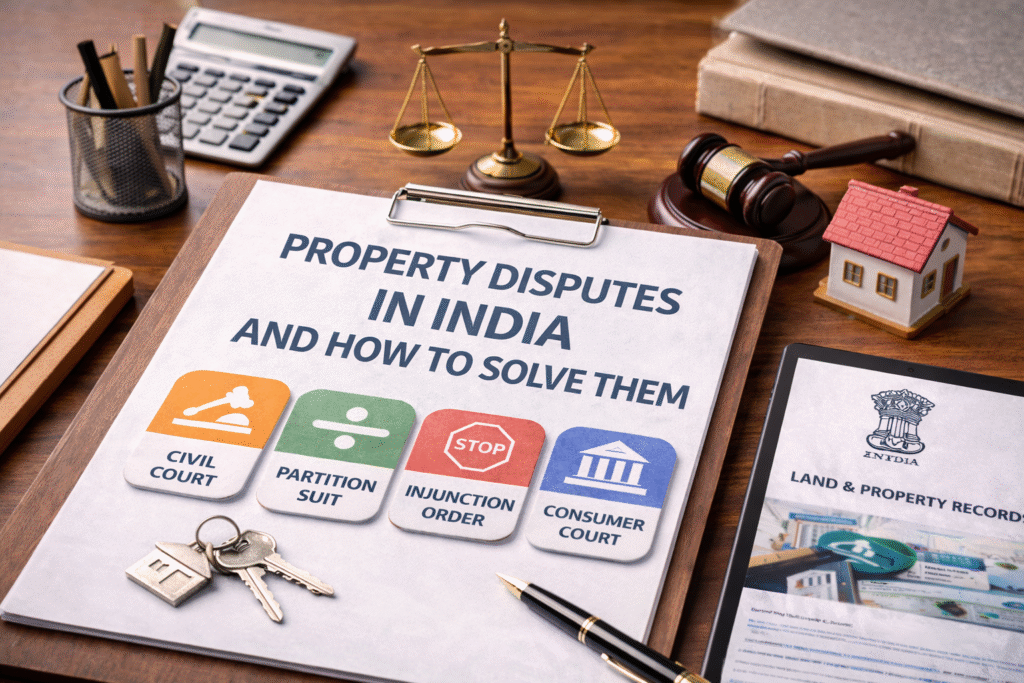
Property disputes are one of the most common legal issues in India. Due to increasing land value, unclear ownership records, and family partition conflicts, many people face long court battles. Understanding Property Disputes and knowing the right legal solutions can help protect your rights and avoid unnecessary litigation.
In this article, we explain the most common types of disputes, causes, legal remedies, and how to resolve them efficiently.

1. What Are Property Disputes in India?
Property Disputes arise when two or more parties claim rights over the same property. These disputes may involve residential land, commercial buildings, ancestral property, or agricultural land.
Common reasons include:
- Wrong documentation
- Fraudulent property sales
- Boundary conflicts
- Inheritance issues
Such disputes fall under civil law, and courts handle them through property litigation and title verification processes.
2.Common Types of Property Disputes in India
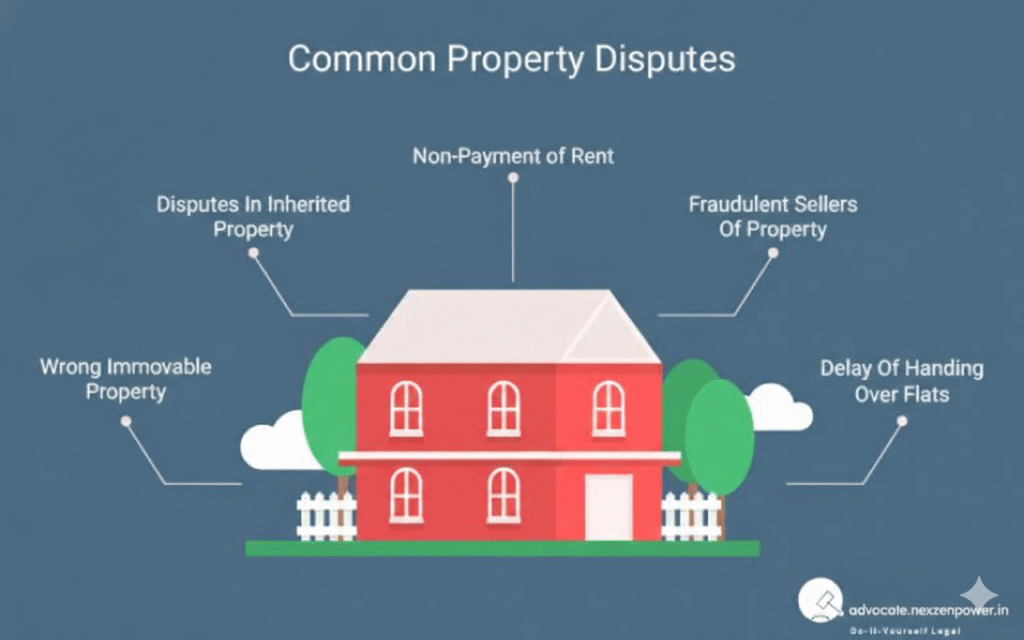
There are many categories of Property Disputes faced by Indian citizens:
🔹 Family & Ancestral Property Disputes
Disagreements among legal heirs during property partition and inheritance claims.
🔹 Land Ownership Disputes
Conflicts regarding land title verification, encroachment, and illegal occupation.
🔹 Builder & Real Estate Disputes
Issues related to delayed possession, construction defects, and builder fraud cases.
🔹 Tenant-Landlord Disputes
Problems related to rent agreement violations, illegal eviction, and unpaid rent.
3.Major Causes of Property Disputes
Understanding the root cause of this helps prevent future problems.
Common Causes Include:
- Lack of proper sale deed registration
- Fake documents and forged signatures
- Oral agreements without legal proof
- Poor property documentation management
- Ambiguous boundaries and survey errors
Many disputes arise simply because buyers do not verify ownership before purchase.
4.Legal Remedies for Property Disputes in India
India offers several legal solutions to resolve Property Disputes effectively:
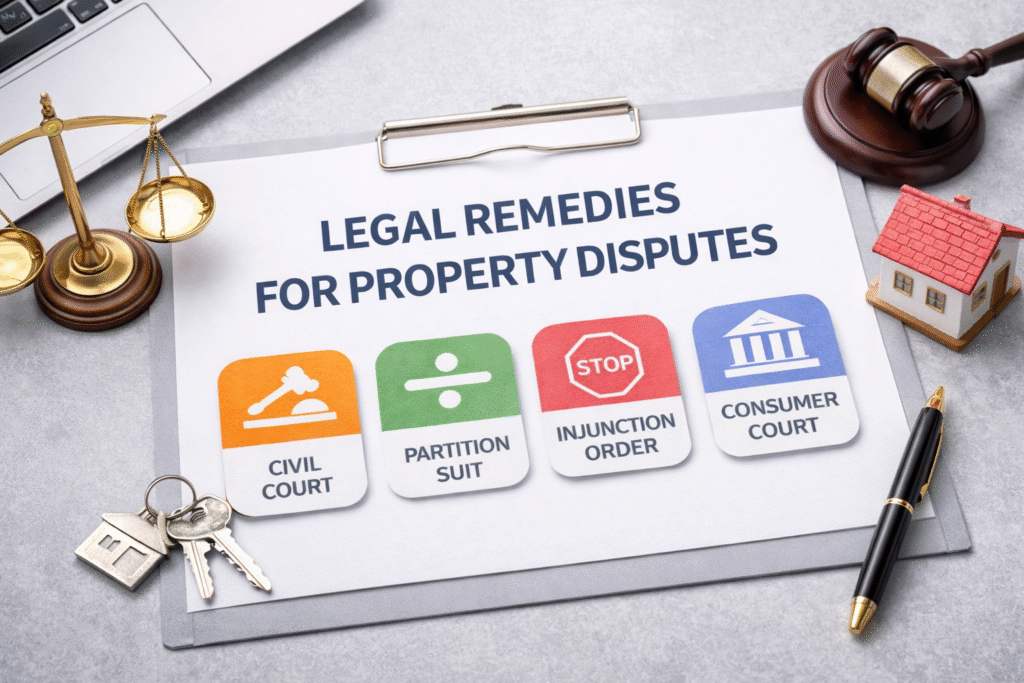
🔹 Civil Court Filing
You can file a property suit for declaration of ownership or injunction.
🔹 Partition Suit
Legal heirs can approach courts for property partition settlement.
🔹 Injunction Orders
Courts can prevent illegal construction or transfer using temporary injunctions.
🔹 Consumer Court
For builder-related issues under real estate consumer protection laws.
5. How to Solve Property Disputes Faster
Following smart legal strategies can reduce time and expenses in Disputes.
Practical Solutions:
- Hire an experienced property lawyer
- Verify all property ownership documents
- Try out-of-court settlements and mediation
- Maintain proper legal records
- Register all agreements legally
Alternative dispute resolution methods like mediation help avoid long court procedures.
6.Role of a Property Lawyer in Dispute Resolution
A qualified lawyer plays a vital role in handling professionally.
Lawyer Services Include:
- Legal notice drafting
- Title verification support
- Court representation
- Agreement preparation
- Property registration assistance
Hiring the right advocate ensures your property rights remain protected.
Conclusion: Final Thoughts on Property Disputes in India
Property Disputes can be avoided and resolved efficiently when people follow proper legal procedures and stay informed about government property regulations. Before buying, selling, or transferring any property, it is highly recommended to verify ownership details and land records through official government portals.
Referring to authorized Government of India land and registration websites helps ensure transparency, prevents fraud, and provides legally valid documentation. Combining government resources with professional legal guidance is the best way to protect your property rights and secure your investment.
Taking timely legal action and staying updated with property laws will help you resolve disputes faster and with less financial stress.