
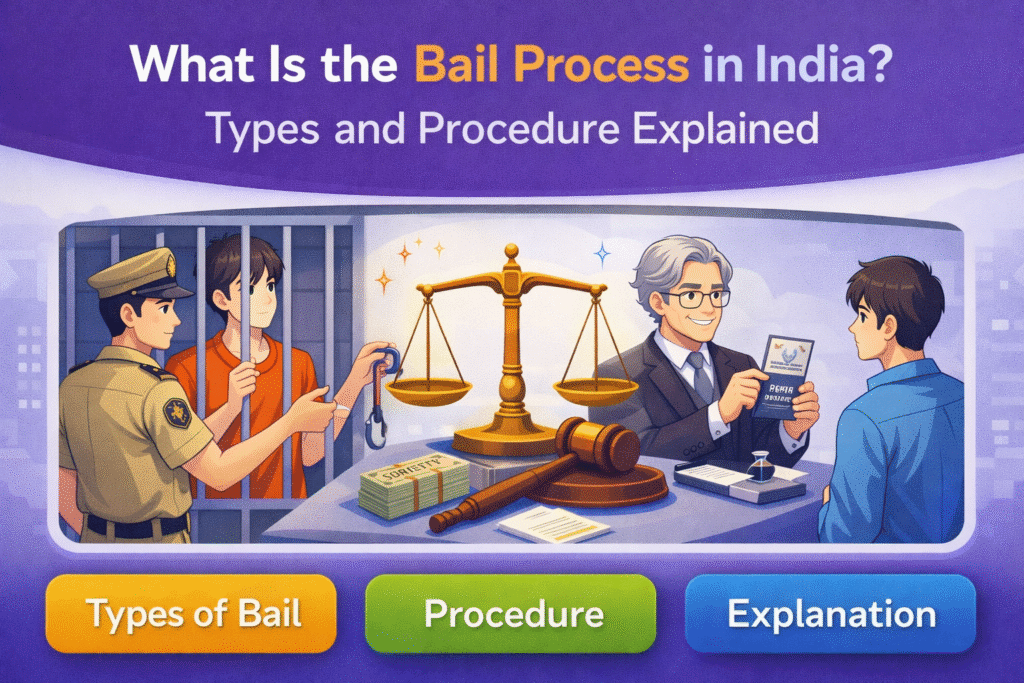
The Bail Process in India is an important legal protection that allows an accused person to remain free while the court case is pending. Bail ensures that a person is not punished before being proven guilty. Indian law focuses on personal liberty and fair trial, which makes bail an essential part of the criminal justice system.
Understanding the bail process helps individuals and families take correct legal steps, avoid unnecessary detention, and protect their fundamental rights.
1.What Is Bail Process in India?
The Bail Process in India refers to the legal procedure through which an arrested person is released from custody by the court on certain conditions. Bail is not a declaration of innocence, but a temporary release until the case is finally decided.
Bail is provided to balance personal freedom and judicial responsibility. Courts is granted by bail when they believe the accused will cooperate with the investigation and attend all court hearings.
For professional legal assistance related to bail and criminal matters, visit our website
2.Types of Bail Process in India
There are three main types under the Bail Process in India:

• Regular Bail
This is granted after arrest when the accused is in police or judicial custody. The application is filed before the Magistrate or Sessions Court under Criminal Procedure Code provisions.
• Anticipatory Bail
This is taken before arrest when a person fears false accusation or wrongful arrest. It is provided by protection from immediate custody.
• Interim Bail
This is temporary bail granted for a short duration until the final bail hearing is completed.
Each type plays a major role in safeguarding the rights of the accused.
3.Step-by-Step Bail Procedure in India
The Bail Process in India usually follows a structured legal process:
• Preparation of bail application
• Submission of application in court
• Hearing by the judge
• Examination of case facts
• Court order on bail
• Submission of bail bond and surety
Once the court approves bail and conditions are fulfilled, the accused is legally released from custody.
4.Conditions Under Bail Process in India
Courts impose certain conditions while granting bail under the Bail Process in India to ensure fairness and compliance:
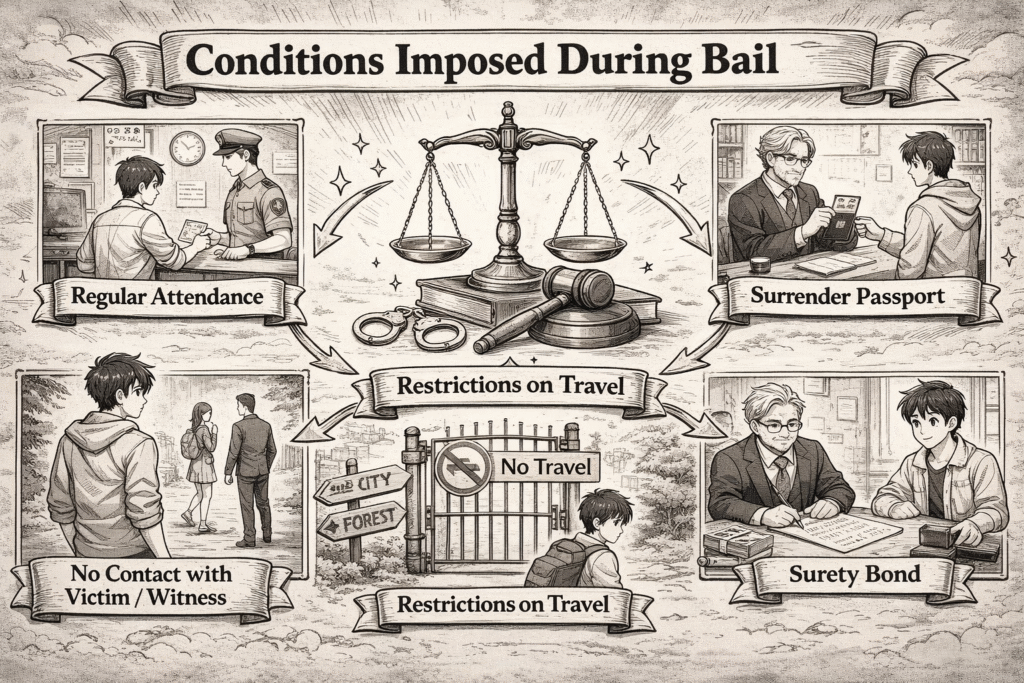
• Regular appearance before the court
• No interference with witnesses
• No tampering with evidence
• No involvement in further criminal activity
• Restriction on travel without court permission
Failure to follow these conditions can result in cancellation of bail and re-arrest.
5.When Can Bail Be Rejected?
Bail may be denied in certain serious situations under the Bail Process in India, such as:
• Serious criminal offenses
• Risk of escaping from justice
• Threat to witnesses or victims
• Possibility of evidence destruction
• Repeat offender history
Courts carefully analyze the nature of the offense and the behavior of the accused before making a decision.
6.Importance of Legal Support in Bail Matters
Legal expertise plays a crucial role in the Bail Process in India. An experienced advocate can present strong arguments, submit proper documents, and ensure faster processing of bail applications.
At Advocate Nexzen Power, we provide professional legal services for bail cases, criminal defense, and court representation. Our team focuses on protecting client rights and delivering reliable legal solutions.
Conclusion:
The Bail Process in India is a vital part of the justice system that protects personal liberty and ensures fair legal treatment. Understanding bail types, procedures, and conditions helps individuals make informed decisions during legal emergencies.
Seeking professional legal guidance improves the chances of bail approval and ensures compliance with court requirements. If you or your family members need legal assistance, consulting a qualified advocate is always the right step.For official legal provisions related to bail, refer to:
Code of Criminal Procedure (CrPC)