

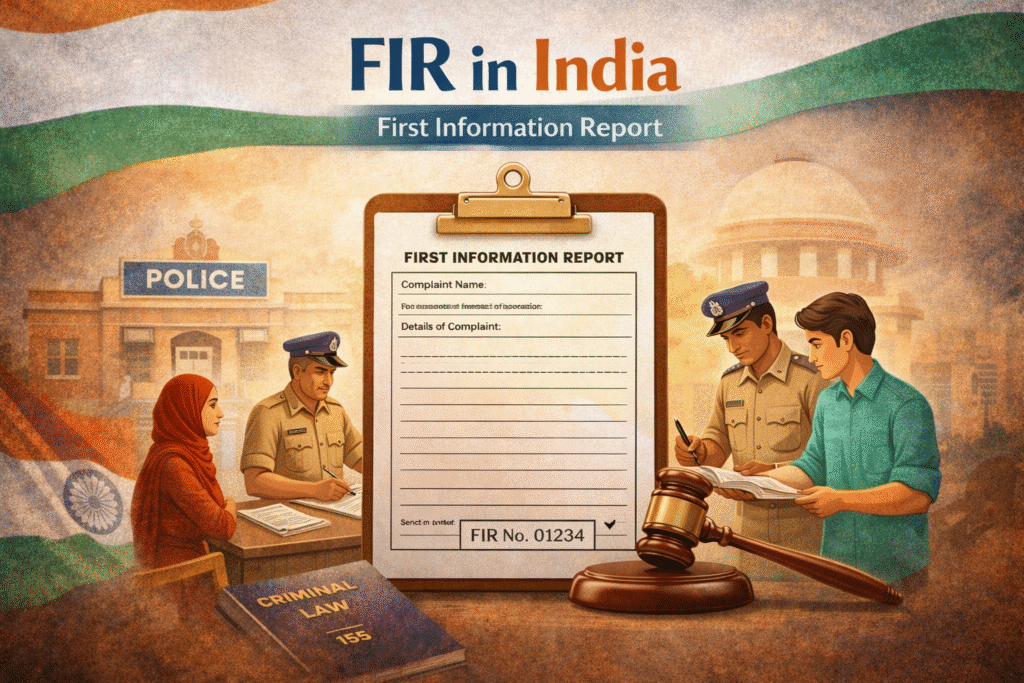
FIR in India (First Information Report) is the first and most important step in the criminal justice system in India. It is the official document registered by police when a person reports a cognizable offence such as theft, assault, cheating, fraud, domestic violence, or cybercrime.
Understanding FIR in India helps citizens protect their legal rights, ensure proper investigation, and take action against offenders under Indian criminal law.
1.FIR in India – Meaning and Legal Definition
FIR in India is registered under Section 154 of the Criminal Procedure Code (CrPC). It records the first version of the crime reported to the police. Once FIR is registered, the police are legally bound to begin investigation.
The main purposes of FIR include:
- Creating official crime record
- Starting police investigation
- Protecting victim rights
- Preventing evidence tampering
- Supporting court proceedings
An FIR also acts as primary legal evidence during trial in criminal courts.
2. FIR in India – Types of FIR You Should Know
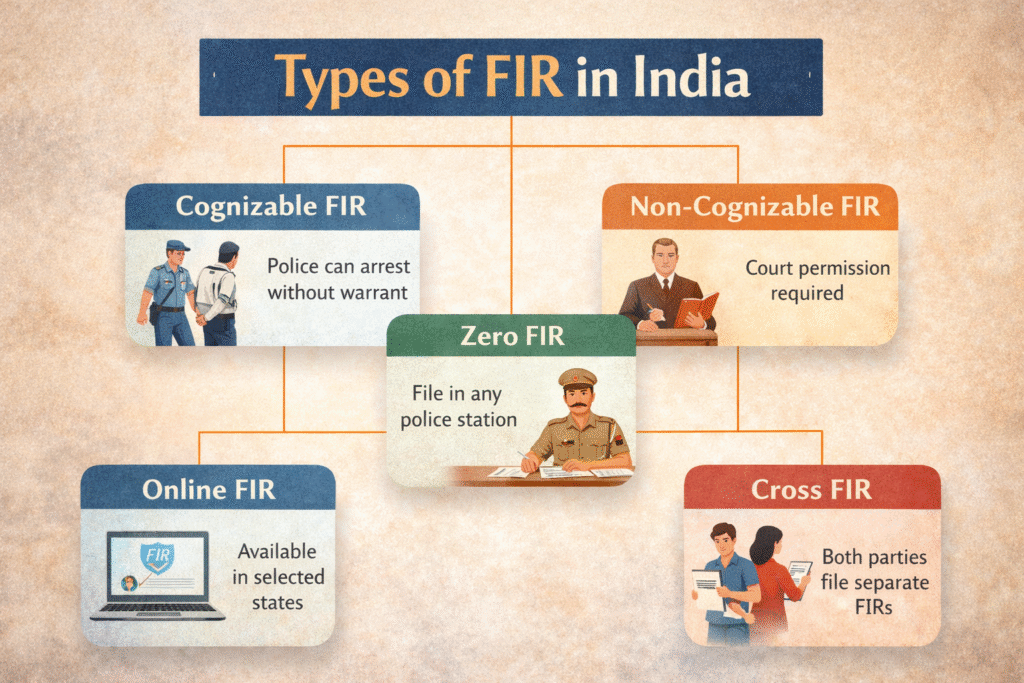
There are different types of FIR in India depending on the situation:
Cognizable FIR
Police can register FIR and arrest the accused without warrant. Examples include murder, rape, robbery, and assault.
Non-Cognizable FIR
Police require court permission before investigation. Examples include defamation and minor disputes.
Zero FIR
Can be filed at any police station regardless of location. It improves access to justice.
Online FIR
Used mainly for cybercrime complaints, fraud, and online harassment.
Cross FIR
Filed by both parties in case of mutual allegations.
Knowing the types of FIR helps citizens choose the correct legal procedure in India.
3. FIR in India – Step-by-Step Filing Procedure
The process of filing FIR is simple and legally protected:
- Visit the nearest police station
- Provide written or oral complaint
- Police record your statement
- Verify details carefully
- Sign after confirmation
- Receive free FIR copy
- Note FIR number for tracking
You can also file online FIR through official police websites in many states.
4.Rights of Citizens While Filing FIR in India
Every citizen has important legal rights while filing FIR in India:
- Right to register Zero FIR
- Right to receive free FIR copy
- Right to approach Superintendent of Police (SP)
- Right to file complaint before Magistrate
- Right to fair investigation
- Right to protection of victim identity
These rights ensure transparency and accountability in the Indian police system.
5.What to Do If Police Refuse to Register FIR
If police refuse to register FIR in India, citizens can take the following legal steps:
- Submit written complaint to SP or Commissioner of Police
- File application under Section 156(3) CrPC
- Approach Judicial Magistrate
- Send complaint by registered post or email
- Consult a criminal lawyer in India
Courts have clearly stated that police must register FIR for cognizable offences.
6. FIR in India – Importance in Criminal Investigation
FIR in India is the foundation of the criminal investigation process. It helps police collect evidence, examine witnesses, and identify suspects.
Importance of FIR includes:
- Starting legal action
- Maintaining crime records
- Supporting prosecution
- Protecting victim rights
- Strengthening court case
Without FIR, criminal proceedings become legally weak.
Common Mistakes While Filing FIR in India
People often make mistakes that affect their case negatively:
- Delay in filing FIR
- Giving incomplete information
- Not collecting FIR copy
- Signing without reading
- Hiding important facts
Avoiding these mistakes improves case success rate and legal protection.
Conclusion – Legal Importance of FIR in India
FIR in India is a powerful legal tool that ensures justice, transparency, and accountability in the criminal justice system. It protects victims, strengthens investigation, and supports court proceedings.
Awareness of criminal law in India, FIR filing rights, and legal procedures empowers citizens to take action against crime. If your FIR is rejected or delayed, consulting a qualified legal advocate can help you protect your rights and pursue justice effectively.