

An arrest is a serious legal event that can affect a person’s freedom, reputation, and future. Unfortunately, many citizens are unaware of their Legal Rights After Arrest, which often leads to misuse of authority and unlawful detention. Indian law strongly protects individuals against arbitrary police action and ensures due process.
This detailed guide explains your rights, police procedures, court safeguards, and how professional legal help can protect you. Understanding your criminal law rights, police custody rules, and constitutional protections is essential for every citizen.
1.Meaning and Importance of Legal Rights After Arrest
Legal Rights After Arrest are the legal protections guaranteed to individuals once they are taken into police custody. These rights exist to prevent abuse of power, torture, illegal detention, and forced confessions.
The Constitution of India recognizes personal liberty as a fundamental right. Even after arrest, a person does not lose their dignity or legal protection. These rights ensure that:
- Police follow lawful arrest procedures
- Accused persons receive fair treatment
- Judicial oversight is maintained
- Human rights are protected
- Arbitrary detention is prevented
Lack of awareness often causes people to accept illegal treatment silently. Knowledge empowers citizens to question unlawful actions and demand proper legal procedure.
2.Rights of an Arrested Person Under Indian Law
Indian criminal law provides multiple safeguards for arrested persons through the Criminal Procedure Code (CrPC) and constitutional provisions.
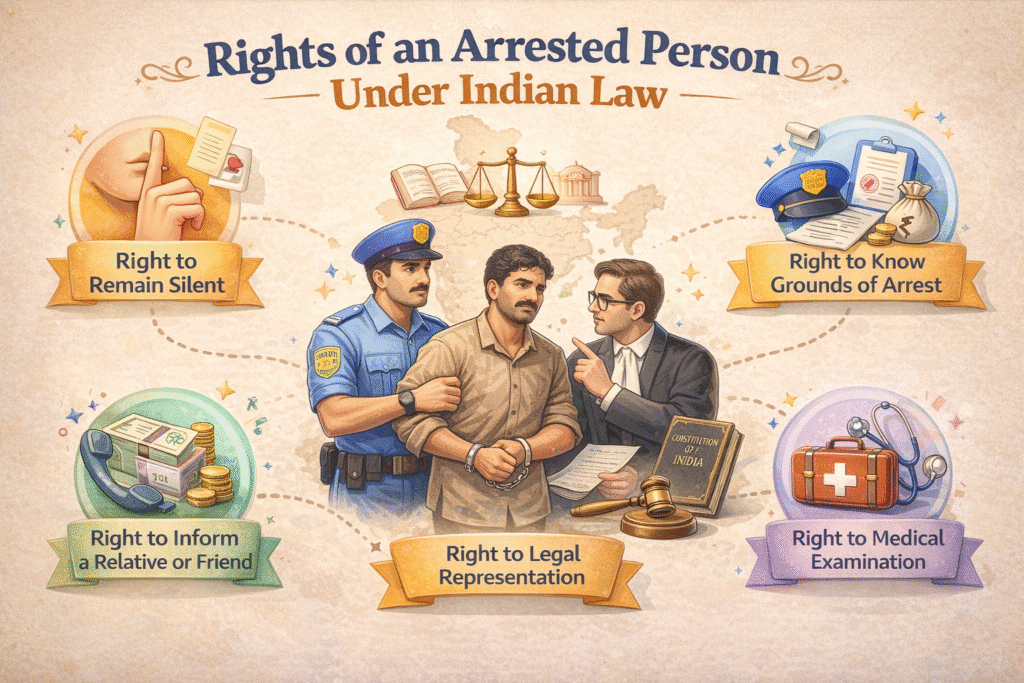
Your Legal Rights After Arrest include:
Right to Know Grounds of Arrest
Police must clearly inform you about the reason for arrest. This allows you to understand the charges and prepare a legal response.
Right to Legal Representation
Every arrested person has the right to consult and be defended by a lawyer of their choice. This ensures protection during police questioning and court proceedings.
Right to Inform Family or Friends
Police must allow you to inform a relative, friend, or well-wisher about your arrest. This prevents secret detention.
Right to Medical Examination
Medical checkups are mandatory to document physical condition and prevent custodial abuse.
Right Against Self-Incrimination
No person can be forced to confess or provide evidence against themselves under constitutional protection laws.
3.Police Arrest Procedure and Legal Safeguards
Police officers are legally bound to follow strict guidelines during arrest. Failure to comply can make the arrest illegal and punishable.
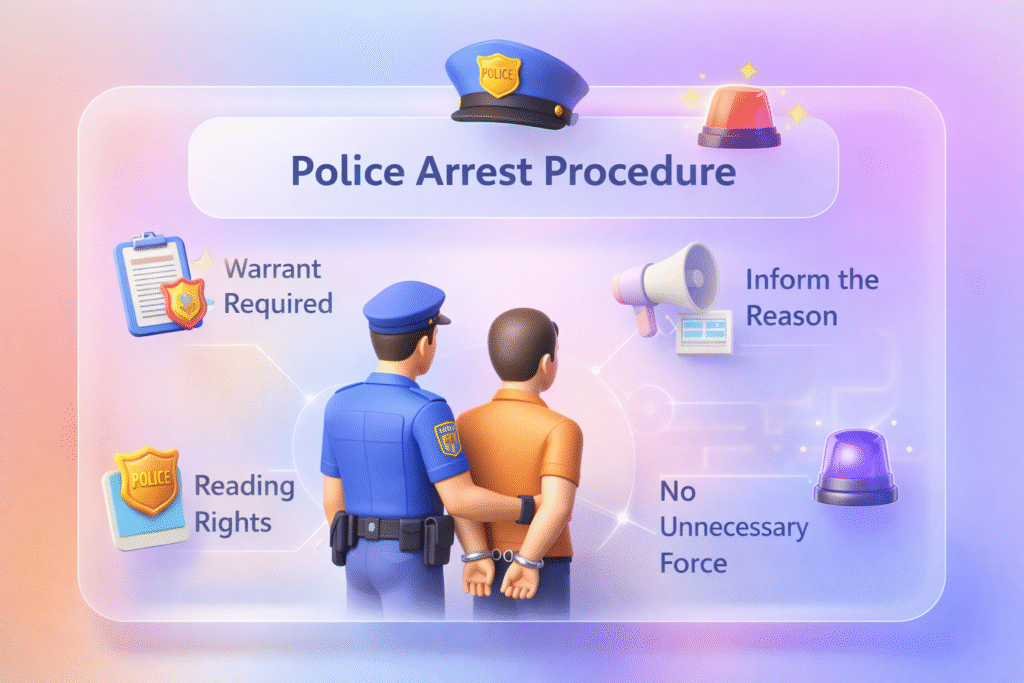
Important safeguards include:
Arrest Memo Preparation
An arrest memo must be prepared mentioning date, time, place, and reasons. It must be signed by witnesses and the accused.
Identification of Police Officers
The arresting officer must display proper identity and badge number.
No Unnecessary Force
Handcuffing is allowed only in exceptional circumstances. Physical violence and threats are strictly prohibited.
Production Before Magistrate
The arrested person must be produced before a Judicial Magistrate within 24 hours. This ensures judicial supervision.
These protections strengthen Legal Rights After Arrest and prevent misuse of police power.
4.Bail Rights and Court Production Rules
Bail is an important safeguard under criminal law. It allows temporary freedom while the case is under investigation or trial.
Bailable Offenses
In such cases, bail is a legal right. Police must grant bail at the police station itself if conditions are met.
Non-Bailable Offenses
In serious cases, bail is granted by the court after hearing both sides. The Magistrate decides based on facts and circumstances.
Judicial Custody Protection
No person can be kept in police custody without court permission. Continuous detention without court orders is illegal.
Understanding court procedures and bail laws strengthens Legal Rights After Arrest and prevents prolonged unlawful custody.
3.Role of Criminal Lawyer After Arrest
Legal assistance plays a critical role immediately after arrest. A skilled advocate acts as a shield between the accused and legal complications.
A criminal lawyer helps with:
- Immediate bail application filing
- Protection during police questioning
- Filing illegal detention complaints
- Representing before Magistrate
- Preparing legal defense strategy
At Rudra Legal Association, we provide professional services in:
- Criminal defense cases
- Police station representation
- Bail matters
- Cheque bounce cases
- Property disputes
- Family law matters
6.How Our Legal Team Supports Arrest-Related Cases
Our legal team understands the emotional and legal stress faced by arrested individuals and their families. We follow a structured legal approach to protect client interests.
Our arrest-related services include:
- Emergency legal consultation
- Immediate bail filing
- Police procedure verification
- Court documentation handling
- Custody rights protection
- Trial preparation support
We believe that awareness of Legal Rights After Arrest combined with professional legal representation is the strongest defense against injustic
Conclusion
Knowledge of Legal Rights After Arrest is essential for safeguarding personal liberty and dignity. Arrest does not eliminate constitutional protections. Citizens must stay calm, demand lawful procedures, exercise their rights, and seek legal assistance without delay.
If you or your loved ones face arrest-related legal issues, experienced legal guidance can protect your freedom and future. Stay informed, stay protected, and always assert your legal rights.