

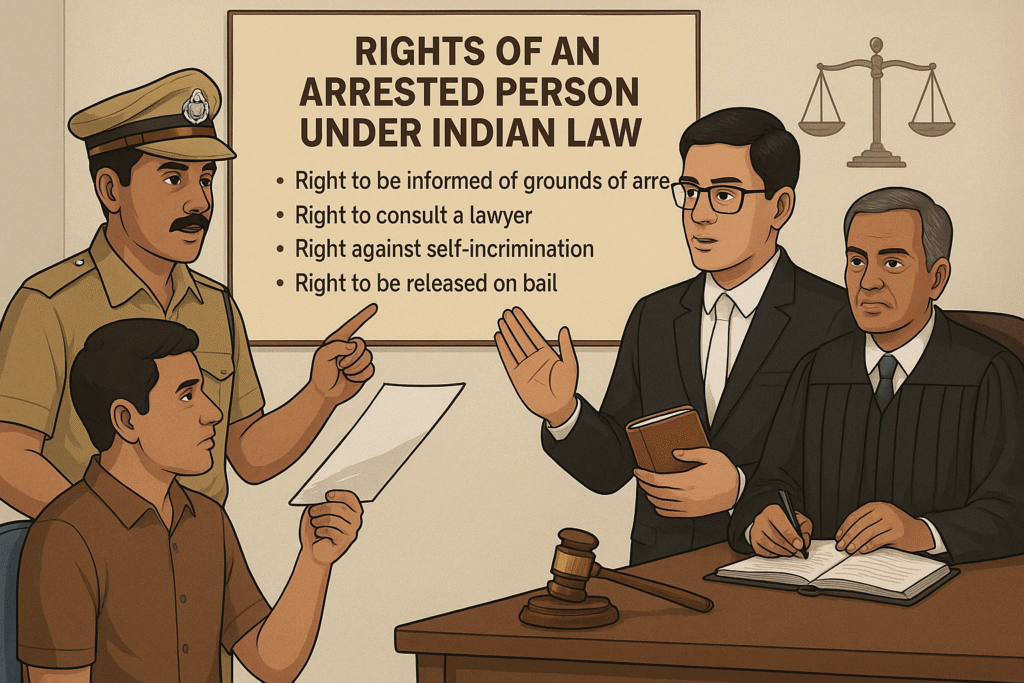
Facing arrest can be a frightening and confusing experience. However, the Indian Constitution and the Code of Criminal Procedure (CrPC) guarantee every individual, irrespective of the alleged crime, a set of fundamental protections. Understanding the **rights of an arrested person** is the first step toward safeguarding one’s liberty and ensuring fair treatment under the law.
If you or a loved one are ever detained in Nalgonda or anywhere else in India, knowing these rights can make a critical difference. This informative guide breaks down the primary legal safeguards available to any person taken into custody.
The Fundamental Rights During Arrest (Under the CrPC)
1. Right to Know the Grounds of Arrest (CrPC Section 50)
One of the most immediate **rights of an arrested person** is the right to be informed about the specific reasons and charges for the arrest. The arresting officer is legally bound to communicate this information immediately. For bailable offenses, the person must also be informed of their right to apply for bail.
2. Right to Legal Representation and Consultation
Article 22(1) of the Constitution grants the right to consult and be defended by a legal practitioner of one’s choice. This right begins the moment of arrest. If the person cannot afford a lawyer, they have the right to free legal aid. Article 39A of the Constitution guarantees this service.
3. Right to be Produced Before a Magistrate within 24 Hours (CrPC Section 57)
This is a vital safeguard against illegal detention Therefore, the arrested person must be brought before the nearest magistrate within 24 hours of arrest, excluding the time necessary for the journey. Detention beyond this period without a Magistrate’s specific order is illegal.
Custody and Detention Rights: What Happens Next?
4. Right to Bail
Securing temporary release is a key right for an arrested person. If the offence is bailable, the police must release them upon providing sureties.
5. Right to Be Examined by a Doctor (CrPC Section 54)
The arrested person has the right to demand a medical examination by a qualified doctor, both at the time of arrest and during detention. This is crucial for recording any injuries and protecting against police brutality or coercion.
6. Right to Inform a Relative or Friend (CrPC Section 50A)
The arresting officer must inform a relative, friend, or other person named by the arrested individual about the arrest and the location where they are being detained. This ensures the person’s whereabouts are known and legal assistance can be sought.
Conclusion: A Shield of Protection Under the Law
The **rights of an arrested person** are designed to uphold the principle of ‘innocent until proven guilty’ and protect citizens from arbitrary state action. Knowledge of these rights is your greatest defense. If these rights are violated, it can lead to the police action being challenged in court.
To understand the foundational procedural law governing these rights, you can refer to the Code of Criminal Procedure (CrPC), 1973, on the India Code portal.
If you or someone you know has been arrested and needs immediate legal advice or defense representation in Nalgonda, do not hesitate. Contact our experienced criminal law advocates to ensure every one of your legal rights is protected from the moment of arrest onward.