

Child Custody in India is a sensitive legal issue that arises during divorce or separation of parents. When a marriage breaks down, the biggest concern becomes the future and well-being of the child. Therefore, Indian courts focus on protecting children from emotional, financial, and psychological harm.
Moreover, custody laws ensure that children receive proper education, healthcare, and parental support. Understanding legal rights and procedures helps parents make informed decisions and avoid unnecessary conflicts.
1.What Is Child Custody in India?
Child Custody in India refers to the legal authority given to a parent or guardian to take care of a child’s daily needs and overall upbringing. This includes responsibility for education, health, emotional development, and living arrangements.
In addition, Indian courts do not automatically favor the mother or father. Instead, judges evaluate the child’s best interest by considering family environment, parental behavior, and emotional bonding. As a result, custody decisions vary from case to case.
If you need professional legal advice regarding custody matters, you can visit Advocate Nexzen Power Legal Services (Internal Link) for trusted legal support.
2.Types of Child Custody in India
Child Custody in India recognizes different custody arrangements based on family situations:
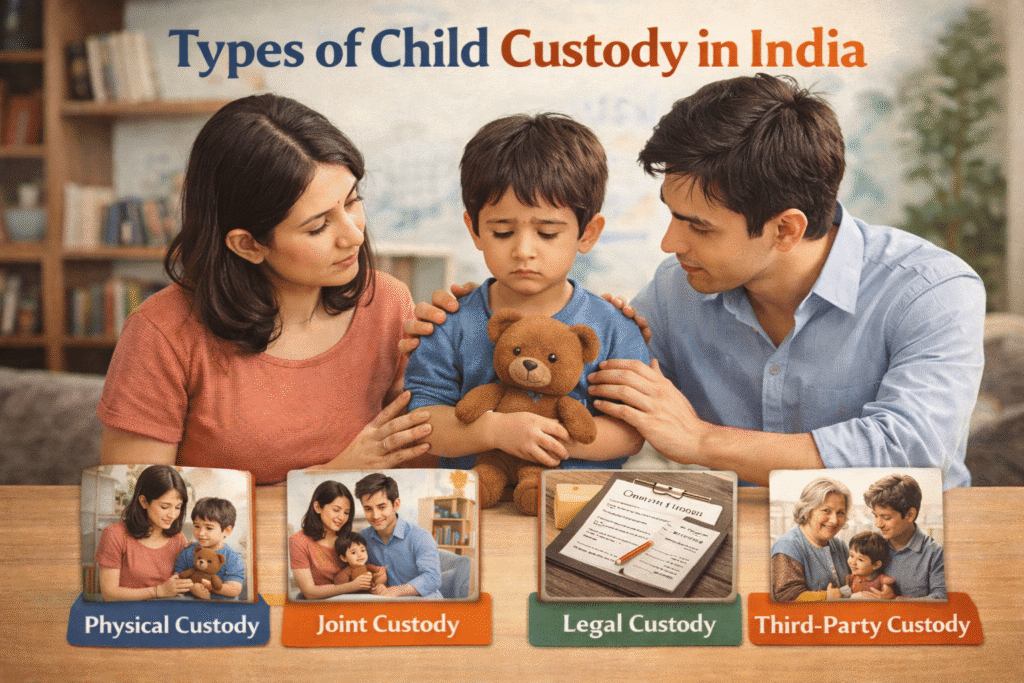
• Physical Custody
Physical custody means the child lives with one parent who manages daily care, schooling, and routine activities. However, courts usually grant visitation rights to the other parent to maintain emotional connection.
• Joint Custody
Joint custody allows both parents to share responsibility. Therefore, the child spends time with both parents on a rotational basis. This arrangement supports emotional balance and parental involvement.
• Legal Custody
Legal custody gives decision-making authority regarding education, healthcare, and religious upbringing. Sometimes, courts grant legal custody to one parent even when physical custody remains with the other.
• Third-Party Custody
In special cases, courts may grant custody to grandparents or close relatives. This happens when parents are unfit or unable to care for the child properly.
3.Court Procedure for Child Custody in India
The Child Custody in India legal process follows structured family court guidelines:
• Filing of custody petition by parent
• Issuance of notice to the other party
• Counseling or mediation sessions
• Submission of evidence and documents
• Interaction of judge with child (if required)
• Passing of final custody order
Moreover, courts encourage peaceful settlement through mediation. As a result, many custody disputes resolve without lengthy trials.
4.Factors Considered Under Child Custody India
Courts examine several important factors under Child Custody in India before passing orders:
• Age and emotional needs of the child
• Child’s preference (if mature enough)
• Financial stability of parents
• Educational facilities and environment
• Physical and mental health of parents
• Emotional bonding between child and parents
Furthermore, courts avoid custody arrangements that disturb the child’s routine and mental stability.
5.Visitation Rights Under Child Custody in India
Even when one parent gets custody, Child Custody in India laws protect the visitation rights of the other parent. These rights help children maintain emotional connection with both parents.
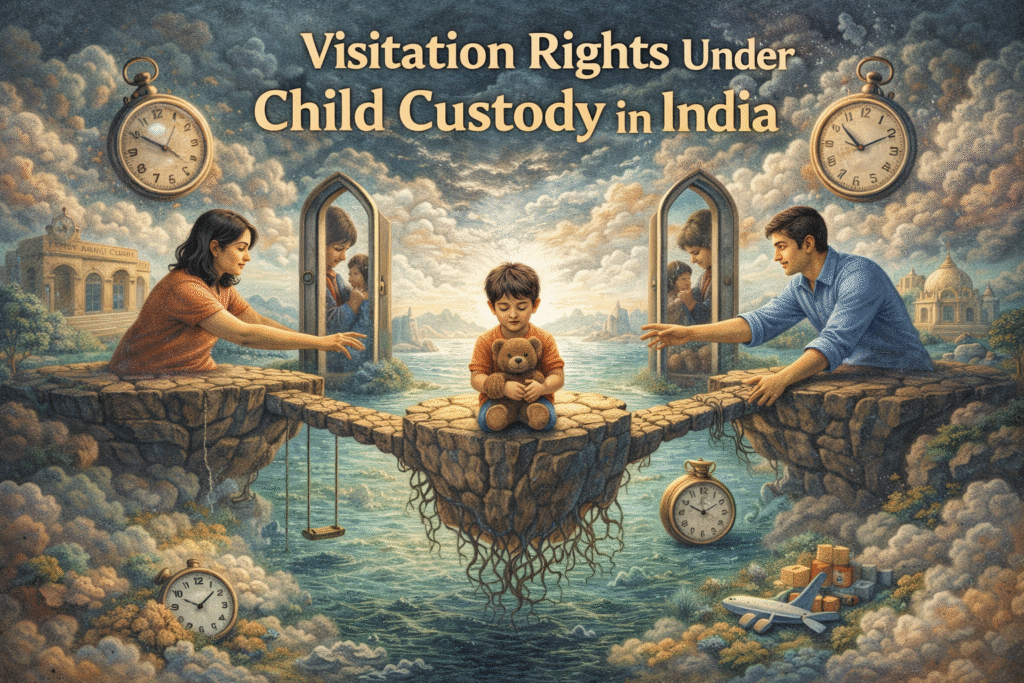
Visitation rights may include:
• Weekly or monthly meetings
• Phone and video communication
• Festival and holiday visits
• Overnight stays with court approval
Therefore, courts aim to create balanced parenting arrangements that support child development.
6.Importance of Legal Support in Child Custody in India
Legal assistance plays a major role in Child Custody in India cases. An experienced family lawyer helps prepare strong petitions, submit proper documents, and represent clients effectively in court.
At Advocate Nexzen Power, we provide professional legal services for child custody, divorce, and family law matters. Our team focuses on protecting child welfare while ensuring fair legal solutions for parents.
Conclusion:
Child Custody in India laws focus on safeguarding children and providing stable upbringing during family disputes. Understanding legal procedures, custody types, and court factors helps parents take confident decisions.
Therefore, seeking legal guidance at the right time ensures better outcomes and protects the emotional and future well-being of children.For official child welfare and family law provisions, refer to:
Ministry of Women and Child Development – Government of India